Monday, September 14, 2020

Pasta Lunghetti Boscaicola - Sausage Mushroom Ragu


Serving the Lunghetti 

con Ragu Boscaicola


The RECIPE

Homemade Lunghetti Pasta alla Boscaicola


la PASTA


FAVORITE ITALIAN DISHES

And SECRET RECIPES

GINO'S SECRET SALSA SEGRETO PASTA SAUCE

SOUPS - PASTA - DESSERTS

And More .. 


.


Sunday, September 13, 2020

Making Strattu Sicilian Tomato Paste


PINA making STRATTU

SICILIAN TOMATO PASTE


Making SICILIAN STRATTU

TOMATO PASTE

AND PORK RAGU


Salting the Toamtoes


Making Ragu with the Strattu


SICILIAN RECIPES


STRATTU


Pina making her RAGU


RECIPES FROM MY SICILIAN NONNA


.


Thursday, August 13, 2020

Homemade Pizza Dough Recipe


Screenshot 2020-08-10 at 9.34.55 PM

Make Your Own Pizza

PIZZA

    “Yes You Can Make It” !


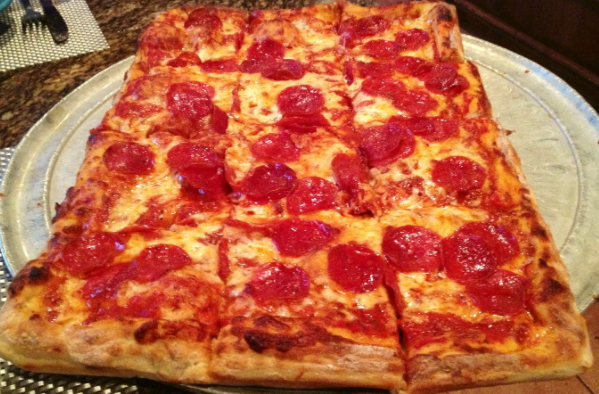
Italian all over Italy, as well as their Italian-American cousins in America,love to make this tasty homemade pan pizza at home. It’s absolutely delicious, and a lot easier to make than you’d think. This is the basic recipe for a Pizza with Tomato & Mozzarella, and you can add other toppings like; Sausage, Pepperoni, Mushrooms, and / or Sweet Peppers if you like. You can even make some delicious Rosemary Focaccia by eliminating the tomato and mozzarella, and adding fresh Rosemary instead. Once you know how to make this basic pizza, you can do a lot of things with this recipe. so give it a shot. Make it a few times and you’ll become a pro, and a hit at the Friday Night Pizza Party, or anytime at all. Buon Apettio! Enjoy.

Ingredients for the Dough :

1 packet Dry Yeast (2 ¼ teaspoons)
1 teaspoon Sugar
1 cup Warm Water  (about 110 degrees)
3 cups Bread Flour
2 teaspoons Kosher Salt (or Sea Salt)
1 Tablespoon Olive Oil for dough & more for pan

You will need a Food Processor to make this dough.

Place the water, Sugar, and Yeast in a small bowl, stir it a little, then let it rest at room temperature until it starts to foam (about 10 minutes).

If your food processor has a plastic dough hook use that. If it doesn’t, then insert the metal cutting blade onto your processor.

Add the Flour and Salt to the food processor and pulse for 2 seconds.

Add the water / yeast mixture and 1 tablespoon of Olive Oil to the processor.

Turn the processor on and let it run until the dough starts to form a ball, and is pulling away from the processor bowl. Then turn the processor on again, for exactly 30 seconds and stop.

Get a large glass or ceramic bowl and lightly coat the whole inside with some Olive Oil. Place the dough in the bowl and move it around so it gets coated completely with olive oil. If you need it, add a bit more olive oil.

Cover the bowl with plastic wrap, and leave the dough to rise for one hour, in a draft-space. Usually somewhere on the kitchen counter is fine.
After one hour to 1 hour & 15 minutes, your dough should have risen to double its original size. The dough is ready to roll out and make pizza.


PIZZA TOPPING :

A jar of Italian Passata di Pomodoro (Tomato Sauce)
Olive Oil
Sea Salt
½ pound whole milk Mozzarella Cheese (Polly-O)
¼ cup grated Pecorino Cheese
8 Basil Leaves, torn by hand
Note : Passata di Pomodro is puree of Italian Tomatoes, aka Tomato Sauce. I recommend getting a good quality Italian product like, Mutti, or anything labeled San Marzano for best results.


MAKING THE PIZZA

You will need a half sheet pan (16.5” x 11.5” ) to make the Pizza.

Turn your oven on to 400 degrees.

Place 2 tablespoons of Olive Oil in the sheet-pan, and spread with your fingers so the whole bottom surface of the pan has a thin coat of oil.

Remove your dough from the bowl and place it in the center of the sheet-pan. Pussh the dough down with your hand, and push and stretch the dough until it forms into the size of the pan, and is completely covering the bottom of the pan.

Cover with plastic wrap and let the dough rest inside the pan for 10 minutes.
Take a spoon and spread enough of the tomato passata (tomato sauce) over most of the pizza dough, leaving a half inch around all sides without tomato, as a border that pizzas always have. 

Drizzle a couple tablespoons of Olive Oil over the pizza. Sprinkle a little Salt over the whole pizza. 

Sprinkle the grated Pecorino Romano Cheese evenly over the whole pizza. 
Evenly spread all the torn Basil over the pizza. 

Then evenly spread shredded mozzarella evenly over the pie. Don’t over do it with the cheese. There should be spots where there is just tomato and no cheese over it. You don’t want the cheese to completely cover the pied or it will be out of balance.

Place the Pizza in the oven and bake for about 16 to 20 minutes, until the crust looks nicely browned. Serve and enjoy.
Note : Naturally you can add other toppings to this basic tomato pizza, such as Pepperoni, Sausage, or Mushrooms, whatever you like.

You can make tasty basic focaccia by not adding the tomato and cheese as the toppings on the dough. Instead, add a little more olive oil, some extra Kosher or Sea Salt sprinkled on top. Then add some chopped fresh Rosemary on top, throw it in the oven and bake, and you’ll have some tasty Rosemary Foccacia.

   
.
 
ScreenShot2016-09-03at3.22.55PM

RECIPES from My SICILIAN NONNA


.      .

Sunday Ragu with Gnocchi and Meatballs


GNOCCHI with MEATBALLS

alla GIGIA


Watch Gigia make homemade Gnocchi
and Ragu Domenica

SUNDAY RAGU with BRACIOLE and MEATBALLS

"Yumm"


Making the Meatballs, and browning the Braciole


RECIPES from My SICILIAN NONNA


GIGIA makes the GNOCCHI


MAKING the POLPETTE

MEATBALLS !


Monday, August 3, 2020

Neapolitan Meatballs Recipe Naples Napoli


NEAPOLITAN MEATBALLS

POLPETTE NAPOLETANA 


Recipe - POLPETTE NAPOLETANA

In SORRENTO

MEATBALLS RECIPE


FAVORITE ITALIAN DISHES

And SECRET RECIPES 


.


Sunday, August 2, 2020

Homemade Lasagna Recipe


Homemade Meat Lasagna


MARIA Makes HOMEMADE LASAGNA

She's 91

GOD BLESS HER


FAVORITE ITALIAN DISHES

And SECRET RECIPES

LASAGNA 

MARINARA SAUCE

ITALIAN SOUPS

PASTA

And More ..


.


Sunday, July 26, 2020

Pavarotti Cooking Pasta - Recipes


LUCIANO COOKS PASTA


“There’s one thing I have to say about Luciano’s favorite foods—it’s all about Modena,” Nicoletta Pavarotti tells me on the phone from the very town of Modena, where she shared a home with her late husband and has lived since the great tenor passed away 12 years ago. 
Best known to contemporary American audiences for being the set of Aziz Ansari’s Italian adventures in Netflix’s hit Master of None, the gorgeous town, set 26 miles from Bologna in the Emilian countryside, has given the world more than a few wonders: Enzo Ferrari, the founder of the eponymous race car company; chef Massimo Bottura’s Osteria Francescana, one of the world’s best restaurants; balsamic vinegar, not the caramel-infused version but the real deal that takes a full 12 years to mature; and Luciano Pavarotti, arguably the greatest classical singer of the century.


Pavarotti Cooking Pasta 

Remembered as the gentle giant of the opera world, Pavarotti was above all a prodigiously gifted musician with perfect pitch and a clear, voluptuously beautiful voice. He skyrocketed to stardom in the early 1970s and, soon afterwards began to advocate for many humanitarian causes. 
Along with his friends José Carreras and Plácido Domingo, known as the Three Tenors, he sang in sold-out stadiums all over the world and turned the aria Nessun dorma from Puccini’s Turandot into the closest thing the opera world has had to a hit song in the 20th century. 
A major star on all continents (he was the first classical singer to fill concert halls in China), Pavarotti was also a tabloid obsession, both for his love life (his relationship with future wife Nicoletta Mantovani, 34 years his junior, in the early 1990s while he was still married to his first wife was quite a scandal) as well as his remarkable girth and recurring efforts to lose weight. 


At The Table with Pavarotti


“One must remember that Luciano went through World War II as a child,” explains Nicoletta Pavarotti. “He suffered from hunger and always remembered those painful years. His humanitarian action—when he was alive and to this day through the Pavarotti Foundation—focused on kids who are the victims of war. Undoubtedly, he kept an appetite and also the desire to welcome people with food, to share what he had. In our house, any guest would be immediately dragged into the kitchen for a bite. It was Luciano’s way to welcome people. And when he cooked, the message was I want to make you, all of you who are gathered around the table, happy.”
Born to a baker and a factory worker, the future tenor grew up nourished on some of the greatest Italian dishes, such as lasagna, tortelloni, and pasta al sugo (the true name of Bolognese sauce, never—locals will tell you with a death stare—to be eaten with spaghetti). The menu usually included Parmigiano cheese and prosciutto from nearby Parma, vegetables from the garden and pasta fresca made by hand every day, and some dishes reserved for special occasions, like tortellini in brodo (in broth) that is traditionally eaten on Christmas. His favorite wine, tasted in childhood as was the custom then since it was considered safer to drink than water, was Lambrusco.
The Pavarotti legend is rife with stories of how he remodeled the hotel suites he stayed in, requesting in advance for the minibar to be replaced with a large fridge and for a professional-grade kitchen to be set up. 
His friends would often gift him food, knowing no better way to make him happy. According to a memoir by Pavarotti’s longtime assistant, Edwin Tinoco, pop star Sting once sent the tenor a giant Roquefort cheese. Tinoco also recounts how Pavarotti would travel with provisions, including several pounds of spaghetti and huge Parmigiano cheeses, Teflon pans and favorite wooden kitchen spoons. 


Luciano Eats Pasta
Spaghetti Pesto


As remembered in Ron Howard’s recent documentary about Pavarotti, the singer would cook himself wherever he was staying. “Pasta, always pasta, that was his favorite in any form,” says Nicoletta Pavarotti, adding she and her team “are working on a book of his recipes. He took notes in his agendas. He got very specific with the way he would cook some traditional Emilian dishes. It is extremely moving for me to see his writings, it brings back something of him. And it’s funny too, his playfulness appears clearly in those pages.”
A 1988 New York Times article recorded the maestro’s efforts to keep his weight under control. “‘At 11:45, I make a little veal with vegetables,’ said Pavarotti.‘Then at 3:45 I have a piece of prosciutto. Then at 4:45 a second prosciutto with bread; you need some sugar when you sing. You need the energy. Zap! You cannot be romantic on stage without some sugar.’” 
Even on this 1,800 calorie-a-day diet, far from his more regular indulgent practices, Pavarotti sounds remarkably enthusiastic about food. Nicoletta Pavarotti remembers fondly her husband’s ability to find pleasure in every meal. “Luciano was a man of passion, for his art, for his friends, for life in general. He had a great appetite for life, and his love for food was just one side of that. His curiosity, his enthusiasm were that of a child. How wonderful to keep that quality all your life!”


SUNDAY SAUCE


SOMEWHERE IN THE MYTHOLOGY of food it says that any time more than two Italians get together, a large metal pot is put on the stove, water begins to boil and handfuls of golden or verdant pasta are submerged— to emerge al dente, of course. In these days of fast food and synthetic hamburgers, this may be a vanishing scene, but not where Italian singers are concerned. Whether it's New York, London, Paris, Berlin or Vienna, apartments and hotels are redolent of sauces and pasta if an Italian singer happens to be in residence. 
To celebrate the premiere of the Met's new production of La Bohème, Opera News and food authority George Lang (called "the man who invents restaurants" by Fortune) collaborated in bringing together two of Italy's golden children, Renata Scotto and Luciano Pavarotti, to do just that—cook their favorite pastas for some friends in an evening of food, wine and song. The place was Lang's duplex apartment, just doors from his pride and joy, the Café des Artistes on Manhattan's West Side, a restaurant he personally brought back to life and made a showplace. The The Hungarian-born restaurateur has been involved in a multitude of food projects. Currently, via his international food, hospitality and design consulting firm George Lang Corporation, he is devising complexes of food services all over the globe, among them The Market in the new Citicorp complex due to open in New York next August, as well as the new Loews Monte Carlo and Porto Carras, a resort village in Greece. 
Miss Scotto and Pavarotti had been involved in a day-long rehearsal onstage, so they indicated what they would like to prepare, the soprano's ingredients being gathered by Lang, the tenor's personally transported in a shopping bag. Guests included the world's foremost food guru and opera-lover James Beard; pianist and opera buff Eugene Istomin and his wife, Marta Casals Istomin, who heads the Casals Festival in Puerto Rico; Miss Scotto's husband, Lorenzo Anselmi; and Lang's daughter, Andrea, a young artist. 
Lang loves food and the way it looks. To complement the various pastas that would be sampled, he prepared a platter of fresh sturgeon with scallions and cherry tomatoes; a terrine of veal, venison and pork; fresh asparagus marinated in lemon juice and oil; a large salad of watercress and fennel; and several desserts, including the richest chocolate cake known to man, Ilona Torte, a family treasure. The sideboard in his brilliantly lit white-and-mirrored dining room, adjoining the modern double kitchen, held four red wines: Brunello di Montalcino, a jeroboam of Chateau Carbonnieux (a 1971 Bordeaux), a Chambolle-Musigny called "Les Croix" (1959) and Vino Spanna from Casa Vinicolo (1955). Whites were Pinot Grigio (Tenuta S. Margherita, 1975) and Corvo Salaparuta (from Sicily, 1974). Lang juxtaposed the best Italian and good French wines to embellish the various dishes. For starters, Lang proffered an apéritif of champagne with cassis. 
No sooner did the cooking guests arrive than the kitchen action was in full swing, beginning with Marta Istomin preparing an eggplant-tomato-onion-pepper dish from Barcelona called Chanfaina, using garlic, cumin and coriander as main seasonings (similar to ratatouille). Pavarotti's pasta is al tonno, a basic dish of tuna fish, anchovies and tomatoes, easy to whip up for company or when alone. From the Ligurian coast, Miss Scotto had a unique dish of egg noodles (homemade, of course) with a walnut sauce that blends tomatoes, butter and chicken broth with the nuts. Lang had also concocted a rich mussels-in-cream-sauce pasta and another called Primavera. In the various kitchen areas, all were set to work to get things in order. 
Miss Scotto reminisced about her roots on the Italian Riviera at Savona, where she learned how to make valigette (little cases of veal with beef) from her mother. There was also the traditional pesto with trenette (or linguine)—a sauce of fresh basil, garlic, pine nuts, walnuts, grated parmesan and pecorino cheese. And Miss Scotto savored ravioli with a green filling made from meat, eggs, cheese and herbs ground up in a mortar. She often makes her own pasta to this day, using a machine, though her mother persists in the hand method. "I made tagliatelle the other day," she boasts. Other favorites include pasta with ceci (chickpeas) and a special Arrabiata using plum tomatoes cut in half, garlic, red pepper (pepperoncino) and olive oil, all sautéed together and poured over No. 8 Ronzoni. 
Pavarotti's origins are in Reggio Emilia, the food center of Italy, with Bologna as its capital. He was raised in Modena and savors the rich tortellini alIa panna, twisted pasta with cream, cheese and butter— "but deduct the calories, please," he advises. Along with this would go bollito misto, a boiled dinner of beef, veal, ham and tongue, served with a green sauce made from herbs, carrots, green pepper, celery and anchovy. 
Marta Istomin is sautéeing onions and green peppers, which later get combined with canned tomatoes and eggplant, which has been baked in the oven until tender, then skinned. Anselmi tells her he met Casals twenty years ago when the Società Corelli toured to Puerto Rico. Pavarotti notes that the combination she is cooking, with chicken instead of eggplant, becomes Chicken Cacciatore in Italy. Lang serves hot cabbage crisps, a Hungarian creation of cabbage leaves, onions, herbs and butter that is slowly sauteed and then rolled flat together with puff pastry and baked flat until golden. 


PAVAROTTI COOKS PASTA with FRIENDS


LUCIANO LOVES a SIMPLE SPAGHETTI POMODORO


RECIPES FROM MY SICILIAN NONNA


.